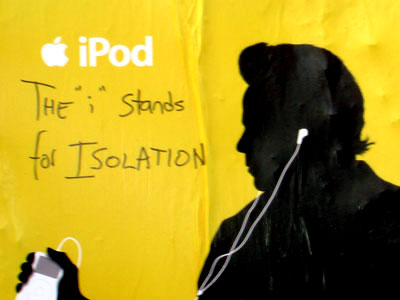
Artykuł Tary Brabazon skłonił mnie do odgrzania kotleta, jakim jest strach przed społecznymi konsekwencjami tzw. nowych mediów. Dla konserwatywnych dziennikarzy i uczonych iPod stał się swoistym chłopcem do bicia, symbolem szeroko pogardzanej iPod culture: kultury konsumpcji, "iPodyfikacji" wszystkich sfer życia i izolacji. Dziennikarz Timesa, Andrew Sullivan, wyraża te obawy następująco:
Technologia dała każdemu z nas jego własny wszechświat, w którym nie ma już możliwości spotkania nieznajomego, usłyszenia utworu, którego sami byśmy nie wybrali, czy opinii, która mogłaby skłonić nas do zmiany zdania. Nastąpiła atomizacja poprzez małe białe pudełka i telefony komórkowe.
To, czego boi się Sullivan, Christine Rosen opisała jako egocasting: zjawisko spersonalizowanej konsumpcji na żądanie, niezrównanej kontroli nad przyswajanym przekazem. W skrajnej formie egocasting przypomina błąd konfirmacji: poszukiwanie tylko tych treści, które potwierdzają nasz punkt widzenia. Skutki są do przewidzenia: ograniczone wystawienie na obce treści, a w konsekwencji nietolerancja dla innych opinii, fetyszyzacja gustu i brak wspólnego kulturowego punktu odniesienia (bo skoro każdy słucha swojej ulubionej muzyki i czyta tylko wiadomości na portalach, z których profilem politycznym się zgadza, to trudno mówić o uczestnictwie w tej samej kulturze).
Krytycy kultury nowych mediów często też zwracają uwagę na to, że korzystając z iPoda czy internetu tracimy kontakt z "prawdziwym światem":
Przykuci do swojej składanki imprezowej, nie myśleli o tym, jak codziennie tracą godziny swojego życia (Brabazon)
Nie tak dawno temu byłem na wycieczce i zorientowałem się, że nie wziąłem swojego iPoda. Panika. Ale potem coś innego. Znów zauważyłem rytm innych, odgłosy samolotu, opinie taksówkarza (...) I poczułem się trochę bardziej "podłączony" i świadomy. Spróbuj. Gdzieś tam jest prawdziwy świat, który ma swoją własną ścieżkę dźwiękową (Sullivan).
Rzeczywiście, można mówić o personalizacji sfery publicznej, dokonującej się za sprawą wszechobecnych odtwarzaczy mp3. Jeden guzik pozwala "wyłączyć" świat wokół (a przynajmniej jego fonię) lub nadać mu zupełnie inny charakter (kto nie zna uczucia, gdy za sprawą ulubionej muzyki szara droga do pracy staje się ekscytującym planem teledysku). Słuchający muzyki przechodzą przez przestrzenie publiczne zachowując jednocześnie komfort bycia w swojej własnej bańce. Obudowani niewidocznym murem nie wchodzą w interakcje.
Nie trudno się domyślić, jakie przesłanie płynie z tych czysto spekulatywnych (bo o ile wiem nikt poza Michaelem Bullem nie przeprowadził dotąd badań na użytkownikach iPoda) artykułów: iPod to aspołeczna technologia, która wyrugowuje ludzi z uczestnictwa w sferze publicznej i prowadzi do atomizacji społecznej. Czyli nic nowego. Te same zarzuty pojawiały się wcześniej w odniesieniu do chociażby internetu czy walkmana. Poza tym, czy tak znowu często zdarza nam się rozpoczynać rozmowę z nieznajomym w autobusie? Raczej nie. W autobusowej sytuacji bliskości fizycznej przy braku bliskości psychicznej częściej pewnie sięgamy po iPoda jak po wybawienie od krępującej ciszy przerywanej krzykami dzieci. A to, że słuchamy tylko tego, czego chcemy? Czy nie jest to ochrona przed bombardującą nas zewsząd sieczką reklamowo-ideologiczną?
------------------------------------------------------
Tara Brabazon's article made me rehash the good old discussion about the social consequences of the so-called new media. For conservative journalists and academics the iPod has become sort of a whipping boy symbolizing the widely despised iPod culture: consummerism, iPodification of all activities and isolation. Times journalist, Andrew Sullivan, voices those concerns as follows:
Technology has given us a universe entirely for ourselves — where the serendipity of meeting a new stranger, hearing a piece of music we would never choose for ourselves or an opinion that might force us to change our mind about something are all effectively banished. Atomisation by little white boxes and cell phones.
What Sullivan fears, Christine Rosen calles egocasting: personalized on-demand consumption of content in which receivers excercises an unparalleled degree of control over what they consumes. In its extreme, egocasting shares some similarities with confirmation bias, a tendency to search for new information that confirm one's preconceptions and avoid information and interpretations which contradict prior beliefs. The consequences are fair enough: limited exposure to unwanted content which in turn leads to intolerance towards different ideas, fetishization of taste and lack of common cultural reference point (when everyone consumes highly personalized content, then it's hard to talk about a common ground or shared culture).
Those who criticize the culture of new media often point to the fact that by using an iPod or the internet we lose contact with „the real world”:
Locked into their party shuffle, they were not thinking about how hours of their lives were being lost each day. (Brabazon)
Not so long ago I was on a trip and realised I had left my iPod behind. Panic. But then something else. I noticed the rhythms of others again, the sound of the airplane, the opinions of the taxi driver (...) And I felt just a little bit connected again and a little more aware. Try it. There’s a world out there. And it has a soundtrack all its own. (Sullivan)
Indeed, the personalization of the public sphere by the omnipresent mp3 players is a fact. One button allows us to „shut off” the world around us (or at least its audio dimension) or change our perception of it (when a favorite song transforms the gray wold around us into a music video set). iPod people create their own “bubble” inside which they pass through the public spaces at the same time maintaining their own personal space. Invisible walls that they build around themselves protect them from engaging in unwanted interactions.
It's easy to guess what message Sullivan and the likes want to send. They view iPod as an anti-social technology that prevents people from engaging in the public sphere and leads to atomization. In other worlds, nothing new. It's all been said before about, say, the internet or Sony Walkman. And besides, how often do we engage in a conversation with a total stranger that just happens to be on the same bus? Not too often, I think. In a situation of psychological distance in physical closeness (like on a bus) we'd much rather grab our iPod in order to shut off the inconvenient silence pierced by children's screams. And the fact that we listen to personalized music? Doesn't that help us avoid being bombarded by all those media messages constantly targeting us from around?
